Political Economy of Child Malnutrition: A Mixed-Methods Study of Indonesia’s Stunting Reduction Policy Process and Impact
Why does child malnutrition, particularly stunting, matter in international development? Children are defined as stunted if their height-for-age z-score is more than two standard deviations below the 2006 WHO child growth standard median. Compared to monetary poverty comparisons across countries, stunting serves as an accurate marker for poverty and underdevelopment for two reasons. First, it is challenging to establish a poverty line that is consistent across countries. The use of Purchasing Power Parity (PPP) rates to compare poverty is problematic because the consumption choices of the poor is not necessarily captured by the basket of goods used to establish PPP measures. Second, children’s anthropometric shortfall can reflect the inability to meet basic needs. Height can help identify the chronically deprived, with much evidence on schooling, learning, and wages indicated via height. Complementing monetary indicators, stunting provides meaningful insight into development across countries.
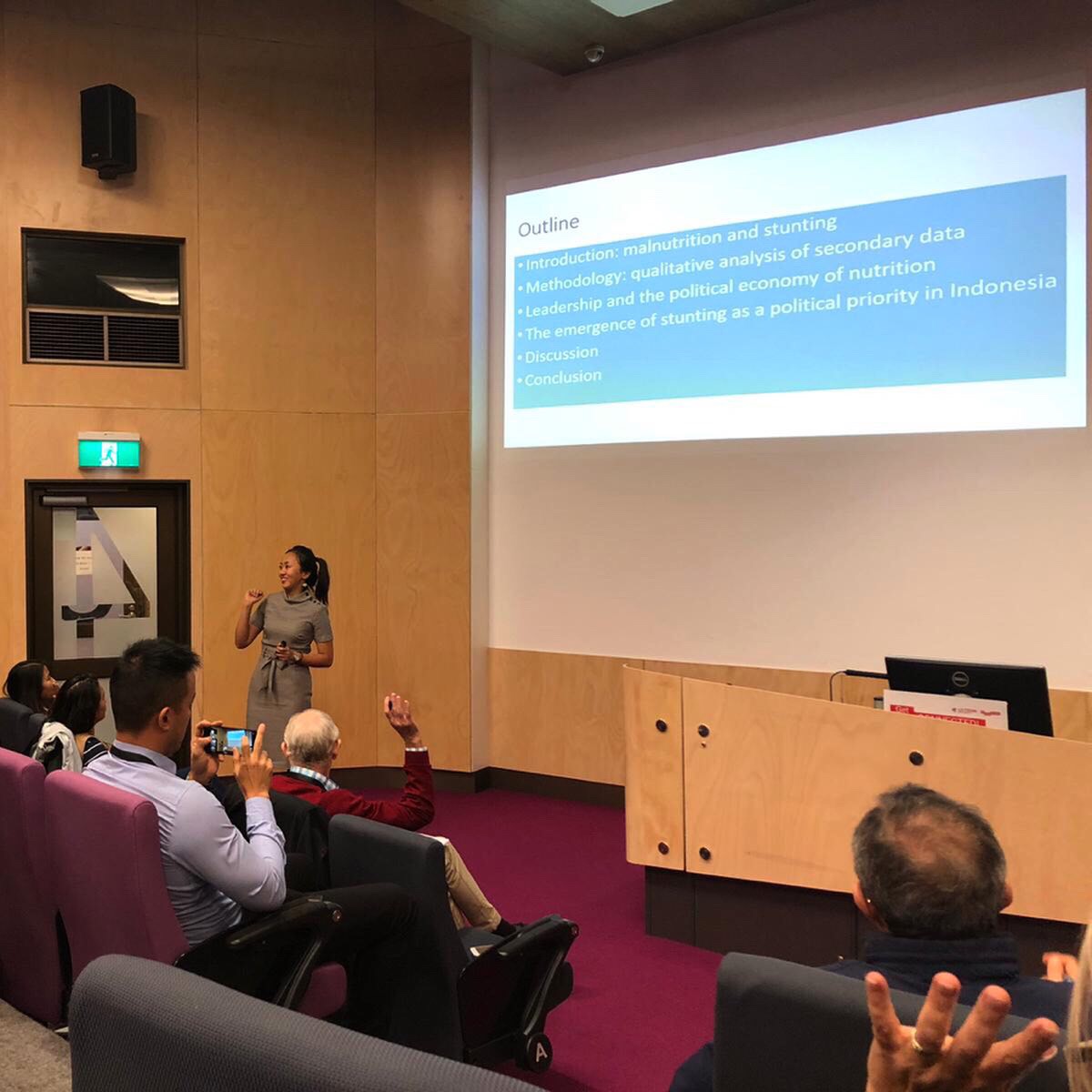
While health policy analyses in low- and middle-income countries (LMICs) typically focus on policy content, impact, and outcomes with little attention to the policy-making process, my work uniquely shifts the focus from “what happened” to “what explains what happened.” Through my PhD three-paper dissertation research, I aim to answer the following research questions.
- How and why did stunting become a policy priority in Indonesia, as demonstrated by the adoption of the National Strategy to Accelerate Stunting Prevention in 2018?
- In a context where bureaucratic coordination is notoriously difficult and where policy redesign could have disrupted implementation, why did Indonesia’s stunting reduction policy maintain implementation success?
- Did Indonesia’s anti-stunting policy affect district-level stunting rates where it was implemented? If so, what are the plausible mechanisms?
Drawing on 65 elite interviews and nationally representative data from the Indonesian Socio-economic Household Surveys (Susenas) and health surveys spanning seven-year periods, my dissertation uses a mixed-methods approach: process tracing and staggered differences-in-difference analysis. Taken together, it advances knowledge of how and why neglected issues such as stunting emerged on national policy agendas; why policy implementation continues despite policy redesign; and how to evaluate policy impacts when different units receive treatment at different times.

Food Systems Countdown Initiative
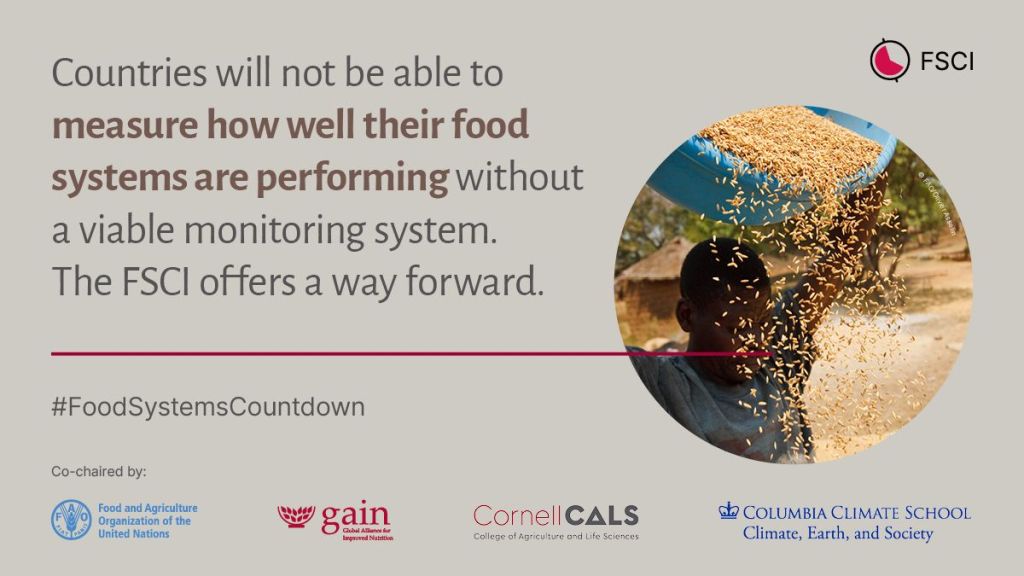
Food systems are a foundation of human and planetary well-being but they also unfortunately contribute to ill health, inequity, environmental degradation, and GHG emissions. How to solve this paradox? We demand urgent food systems transformation. The Food Systems Countdown Initiative (FSCI) is an interdisciplinary, multi-institution scientific partnership to monitor global food systems in service of meeting the SDGs and other global goals, and to provide and analyze relevant food systems data across countries.
After a two-year process of research, analysis, and consultation, we recently published on Nature Food the world’s first attempt to monitor changes in our global food systems “The state of food systems worldwide in the countdown to 2030.” This analysis suggests 50 indicators of food systems across five themes: (1) diets, nutrition and health; (2) environment, natural resources and production; (3) livelihoods, poverty and equity; (4) governance; and (5) resilience.
Nutrition as a Basic Need: A New Method for Utility-consistent and Nutritionally Adequate Food Poverty Lines
Nutrition is a basic need, so is a healthy diet. The current poverty estimates measured from poverty lines that use energy-based food baskets do not reflect this need. We need a reset of the utility level defining the poverty threshold. With this reset, many more people in the world are mired in poverty– energy poor versus nutritionally poor. In this ongoing research, I join Kristi Mahrt (International Food Policy Research Institute — IFPRI), Anna W. Herforth (Food Prices for Nutrition project), Channing Arndt (IFPRI), and Derek Headey (IFPRI) to redefine a nutrition-sensitive poverty line that follows cost of basic needs principals, or “healthy diet poverty line” in Indonesia. We use the 2019 National Socio-Economics Survey (SUSENAS) and the Guidelines for Balanced Nutrition, Regulation of the Minister of Health of the Republic of Indonesia, No. 41, 2014. This work incorporates healthy diet guidelines into the standard cost of basic needs methodology widely used to estimate poverty in LMICs. The cost of basic needs approach aligns the food poverty line with a calorie target. Our approach aligns the food poverty line with both a calorie target and healthy diet guidelines such as those found in food-based dietary guidelines. The methodology has been applied to a Myanmar study.
 Deviana W. Dewi