

I find teaching to be one of the most fulfilling aspects of my academic journey. Before beginning my Ph.D., I spent eight years working in operations and research focused on poverty, nutrition, and social development. I draw on this professional experience in the classroom, offering students practical perspectives and real-world examples that they often find relevant and energizing. I aim to equip students with the critical thinking skills to challenge ideas and assumptions in a constructive manner, the humility to listen in order to understand (rather than to reply), and the confidence to engage with complex, real-world problems.
“Devi is responsible and loves to share her experience in health field with us. She was super engaged and excited in each class. Meeting her is always a pleasure.” (student evaluation, Global Health Policy)
I’ve had the opportunity to teach in both master’s and doctoral programs at the Johns Hopkins University School of Advanced International Studies (SAIS). As someone who inhabits multiple identities—a woman of color, a citizen of the Global South, a first-generation student, a scholar, a practitioner, and a person of faith—I am aware of the systemic barriers that can shape students’ academic experiences. Legacies of colonialism, racial and gender inequities, and unequal access to opportunity all influence who gets to thrive in higher education. With this awareness, I intentionally create space for students to voice challenges early and try to provide multiple forms of support throughout the learning process.
“The course broke down global health concepts into very easy-to-digest modules and always inspired active and sometimes spirited debate in our class as our opinions and preexisting notions were consistently challenged in the best ways. I also very much appreciated that Jeremy and Devi were willing to evaluate the course mid-way through and make adjustments based on our preference, they really cared about the way they taught and that were were all equals in this course.” (student evaluation, Global Health Policy)
Global Health Policy
In Fall 2022, I worked as a teaching assistant for Professor Jeremy Shiffman’s Global Health Policy course in Washington, D.C. The class explored major contemporary challenges in global health and guided students through critical analysis of key critical issues: the contours of the field, the aims of global health, the complex determinants of health outcomes, and the ethical bases for promoting health. Believing that learning takes place primarily through active engagement with material rather than through passive listening, this class is heavily participatory. The philosophy of this technique is that individuals learn best when they grapple with actual material to uncover lessons themselves, rather than when the instructor feeds them information and they listen passively. Alongside Professor Shiffman, I ensured that students were able to make connections between course materials and their own experiences with global health politics.
Circular Health: Policy Actions to Co-advance Health and Sustainability
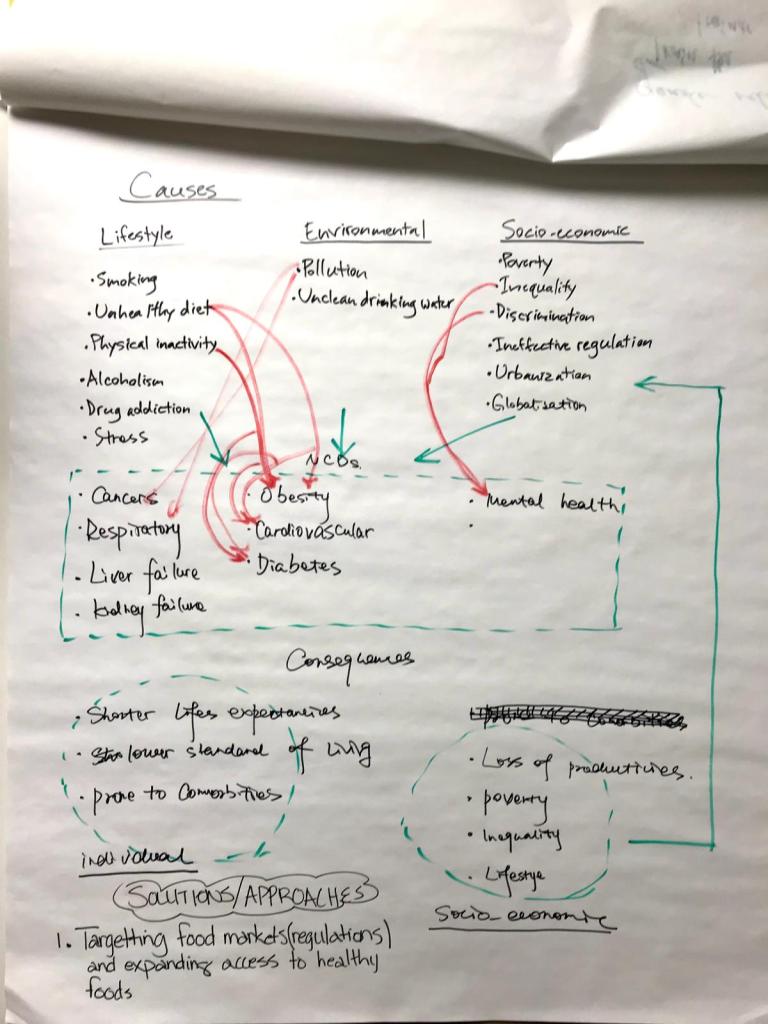
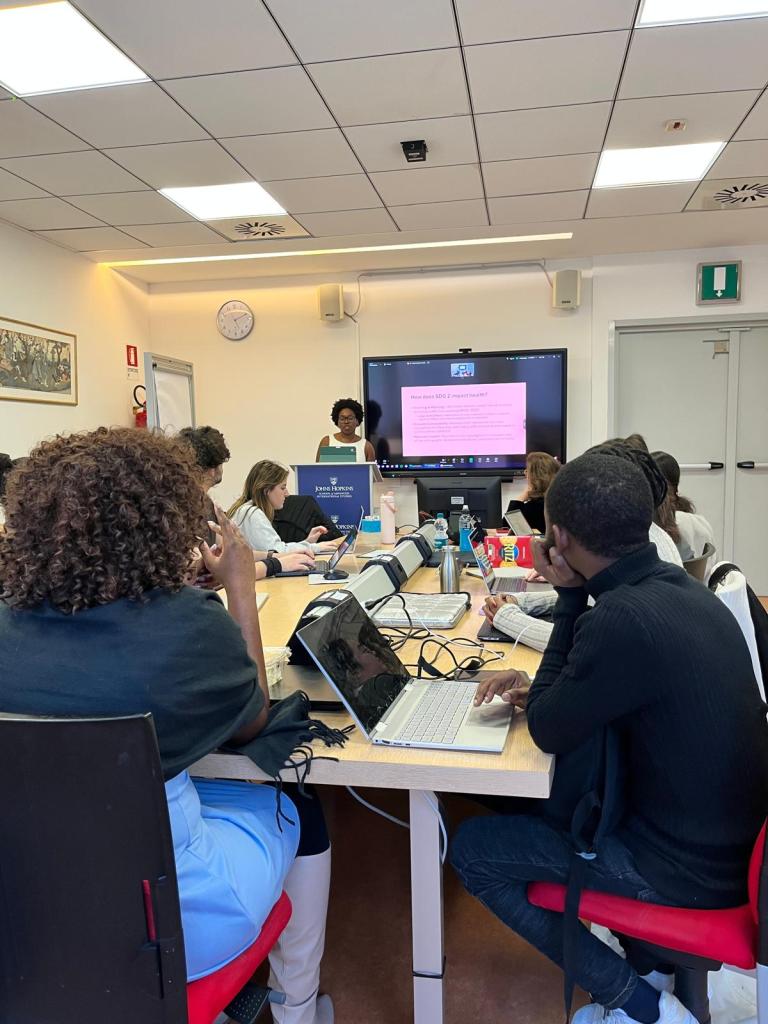
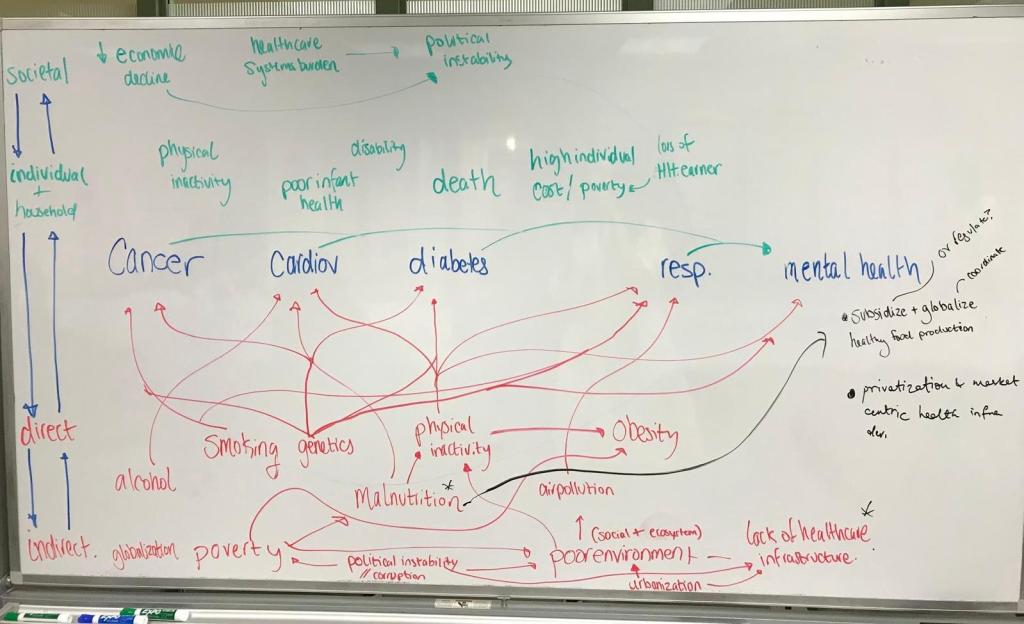
In Spring 2025, I served as a teaching assistant for Professor Ilaria Capua’s course Circular Health: Policy Actions to Co-advance Health and Sustainability at the SAIS Europe campus in Bologna, Italy. This course introduced a systems-thinking approach to the intersections of human, animal, environmental, and planetary health, with a particular focus on aligning health policies with the 2030 Sustainable Development Goals (SDGs). Open to students from all backgrounds, the course emphasized advocacy strategies for health-related policy change. Together with Professor Capua, I incorporated a flipped classroom model, assigning each student an SDG and tasking them with leading a 15–20 minute session—teaching the class (including Professor Capua and myself) how their selected goal intersects with health and sustainability.
Research Methods
In Fall 2025, I join Professor Matthew Kocher as a teaching assistant for Doctor in International Affairs Research Methods I in Washington, D.C. This doctoral-level course introduces students to foundational principles of social science research design. The curriculum is structured in two parts: the first focuses on crafting research questions, defining concepts, case selection, and sourcing evidence—including skills like interviewing and document analysis. The second part introduces the logic of inference behind the three primary methods used to test hypotheses and assess competing explanations: large-N econometrics, experimental and behavioral approaches, and qualitative methodologies.
 Deviana W. Dewi